

Torsion springs store mechanical energy to counterbalance the weight of sectional garage doors, making manual lifting easy and reducing strain on the opener. Key factors that determine spring selection, torque, and lifespan:
- **Door weight:** Heavier doors require springs with greater torque (thicker wire or shorter effective length). Accurate door weight measurement is essential for correct spring size and safe operation.
- **Door height & drum diameter:** Taller doors wrap more cable per drum revolution; larger drum diameters increase effective lift per turn but reduce torque. Drum size is matched to door height and cable wrap to achieve the correct lift-to-torque ratio.
- **Lift type (standard vs. high lift vs. low headroom):** Lift configuration changes the number of drum turns needed to fully open the door. High‑lift setups require different spring indexing and sometimes longer springs or additional torque to accommodate more wraps before full open.
- **Spring length & wire size:** Torque is a function of wire diameter, mean coil diameter, and active coil count. Shorter springs or larger wire produce higher torque; manufacturers calculate combinations (wire × diameter × coils) to meet the door’s balance specifications.
- **Drum grooves and cable wraps:** Properly grooved drums and full cable wraps ensure predictable torque transfer. Insufficient wraps or worn drums can change effective lever arm and cause imbalance.
- **Cycle life & safety margin:** Springs are rated in cycles (e.g., 10k, 20k). Selecting springs with appropriate cycle ratings and a safety margin for daily use extends service intervals and reduces failure risk.
- **Balance testing and set points:** Technicians set the spring preload and winding cone so the door remains slightly counterbalanced—typically staying open at a specified mid‑position—ensuring the opener only provides minimal assist.
- **Dual‑spring vs. single‑spring setups:** Wider or heavier doors often use dual springs for redundancy and lower per‑spring stress, improving safety and longevity.
- **Environmental factors:** Corrosion, temperature, and impacts reduce spring life; coated springs or higher cycle ratings mitigate these effects.
Practical outcome: correct spring selection — matching door weight, height, lift type, drum diameter, and required cycle life — yields smooth, balanced operation, safe automatic reversal, and longer component life. Always have torsion springs measured, installed, and adjusted by licensed technicians to ensure accurate calculations and safe handling. Keywords: torsion spring mechanics, door weight, drum size, lift type, spring wire size, spring cycle life, torsion spring replacement, Overhead Door Solutions.
Torsion Springs
Torsion Spring Chart

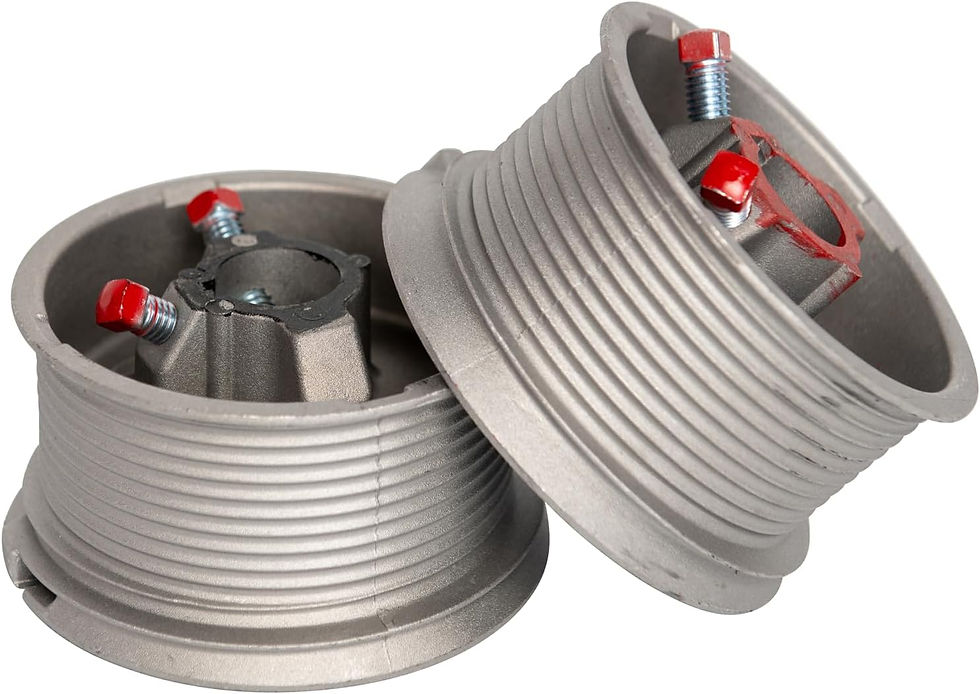
Standard Lift Drum
High Lift Drum
